
1. Industry Transformation
Economy
EU GREEN DEAL
2050 Goal

Transport
2030 Target: -55% Greenhouse Gas Emissions
The green economy is reshaping competition. Traditional factors like price and quality are now joined by transparency and sustainability.
The Shift:
From isolated eco-features to fundamental restructuring of entire industries.
2. Understanding industry-specific sustainability dynamics
The European Union’s Green Deal isn’t one single law, but a network of strategies that influence each industry differently. For family businesses, understanding how these shifts affect their sector is key to planning a realistic sustainability strategy.
Sector
Key Sustainability Focus
Food & Agriculture
Supply chain transparency, organic certifications, reduced pesticide use, and water conservation.
Retail
Packaging waste reduction, ethical labor practices, and circular economy principles (take-back programs).
Tourism
Minimizing impact on local ecosystems, supporting local communities, and energy efficiency in hospitality.
Manufacturing
Resource efficiency, emissions reduction, waste management, and industrial symbiosis (reusing by-products).
3. Charting your course: Industry sustainability mapping
For a family business to navigate the green transition effectively, it is essential to understand how its sector is positioned in terms of environmental impact, regulation, and market opportunities. This process, known as industry sustainability mapping, creates a clear overview of where the industry stands and where change is heading.
Every industry leaves a unique mark on the planet. Some, like textiles, gulp down vast amounts of water and chemicals. Others, such as manufacturing and transport, are energy guzzlers. And then there are those, like packaging, that generate mountains of waste.
Sustainability Mapping
Pinpointing these areas reveals where your greatest opportunities for innovation await.
Key Inputs

Energy Consumption

Raw Materials

Water Usage
Key Outputs

Carbon Emissions

Waste Generation

By-products
1
Map Sector Footprint
2
Identify
Inputs / Outputs
3
Analyze
Regulations
4
Identify Opportunities
Benchmarking
While laws set the minimum, voluntary sustainability standards and certification schemes often define leadership. These go beyond compliance, influencing industries through globally recognized systems like FSC (for paper and wood products), Fairtrade (for food and agriculture), or ISO 14001 (for environmental management). What was once seen as an optional extra is now becoming a prerequisite. In many B2B supply chains, these certifications are not just badges of honour: they are entry tickets to access new markets, secure partnerships with large clients, and demonstrate a genuine commitment to sustainability.
To make this crucial step concrete and actionable, family businesses have an invaluable, free resource at their fingertips: the ITC Standards Map.
Developed by the International Trade Centre and founded by European Union, this online platform is one of the most comprehensive global resources for exploring sustainability standards. It’s designed to demystify the world of certifications and help businesses make informed decisions.
The ITC Standards Map
Covers more than 300 sustainability standards and initiatives across industries and products.
Allows detailed comparison of certification requirements (e.g., environmental, social, traceability, and governance criteria).
Provides sector and region filters, so businesses can quickly see which standards apply to their product type or export market.
Offers practical insights into costs, audit requirements, and themes (climate, labour, biodiversity, etc.), making it easier to evaluate feasibility.
Supports benchmarking: family businesses can check which standards competitors are adopting and whether aligning with them could open new markets.
Standards Map - 10 Year Anniversary
The ITC Standards Knowledge Hub
The ITC Standards Map Knowledge Hub is a powerful ally for family-run SMEs striving to grow sustainably. It brings clarity to what often feels like a maze of sustainability standards, turning complexity into practical knowledge.
The platform is more than a database: it’s a complete learning space. Through its sections on Methodology, Data, E-learning, Tutorials, FAQs, and Glossary, family businesses can explore how sustainability standards are created, how information is verified, and how to use these insights to their advantage.
By navigating the Hub, SMEs can discover which certifications fit their products and target markets, compare their progress with industry peers, and see what meeting specific standards really means in practice. This isn’t just theoretical learning: it’s a way to translate sustainability into daily business decisions. With a clearer understanding of standards and expectations, family businesses can boost their environmental performance, respond confidently to customer and supply chain demands, and strengthen their place in the growing green economy.
Real World Application
Imagine a family-owned textile producer.
By searching for “cotton” on the ITC Standards Map, they can instantly see relevant sustainability standards – from organic farming certifications to labor rights schemes. Similarly, a packaging company can research certifications for paper sourcing, recycling, and eco-labeling. This kind of direct application moves family businesses beyond abstract strategy, providing practical, evidence-based guidance on their sector’s trajectory and how to position themselves competitively.
Reference:
International Trade Centre. (n.d.). Standards Map.
Retrieved from standardsmap.org/en/home
3.2 Competitive Intelligence for green transition
In today’s green economy, knowledge is power – especially when it comes to your competitors. Understanding how others in your industry approach sustainability helps your family business stay agile, inspired, and one step ahead.
Start with what's public:
- ESG & sustainability reports
- Press releases & “green” website pages
- Certifications (ISO 14001, B Corp, etc.)
Check the public conversation
- Media coverage
- Social media reactions
- Customer praise or criticism
➞ Reveals real reputation
Go where the industry meets
- Conferences
- Webinars
- Trade Fairs
Observe the real world
- Solar panels, EV fleets, eco-labels
- Public climate databases & indices
➞ Proof of real commitment
3.3 Market Dynamics and Customer Expectations
Customer expectations are no longer what they were just a few years ago. Think about your own habits as a consumer: have you ever chosen one product over another because it was labeled “organic,” “recyclable,” or “fair trade”?
Within the European Union, sustainability has transcended the realm of corporate social responsibility to become a foundational element of the single market’s regulatory and competitive architecture. This transformation is driven by stringent EU legislation, making sustainable due diligence a non-negotiable requirement for market access, particularly in B2B sectors. The EU Corporate Sustainability Due Diligence Directive (CSDDD) will soon mandate large companies to identify, prevent, and mitigate adverse impacts on human rights and the environment within their global value chains.
This is complemented by sector-specific regulations like the EU Deforestation Regulation (EUDR), which prohibits placing commodities like cattle, cocoa, coffee, and palm oil on the EU market if they originate from recently deforested land. For family businesses, this is not merely about reputation; it is a prerequisite for supplying to larger EU corporations and ensuring long-term operational legitimacy.
EU CONSUMERS = GREEN AT HEART + PRICE-CONSCIOUS
1. The Values Are Strong
94% of EU citizens say protecting the environment matters.
68% believe their buying choices can make a difference.
(Source: Eurobarometer 2023)
2. They Spend Accordingly
Germany’s organic market surpassed €15 billion in
2022.
Brands like ECOALF built premium success using
recycled materials.Many consumers will pay more
for products that match their values
3. But Here's The Tension...
The cost-of-living crisis changed the game.
When prices rise, sustainability competes with
affordability.
At a discount supermarket like Lidl or Aldi:
Green ideal vs. lower price tag.
The price often wins.
4. The Reality:
European consumers support sustainability in
principle.
But daily purchasing decisions are still strongly
influenced by cost.
For your consideration within the EU Context:
How are your B2B customers adapting to the CSDDD or the EU Taxonomy Regulation, and what new data are they requiring from you as a supplier?
- Does your specific end-consumer market within the EU demonstrate a willingness to pay a green premium, or is the expectation that sustainability is a baseline standard covered by the standard price?
- How can your business leverage EU funding mechanisms and certifications to turn compliance from a cost centre into a source of innovation, market access, and competitive advantage?
By thinking about these questions in advance, family businesses don’t have to just react to EU rules. Instead, they can show themselves as flexible, forward-looking players who turn sustainability requirements into real opportunities for growth and competitive advantage.
4. Connection to Case Studies
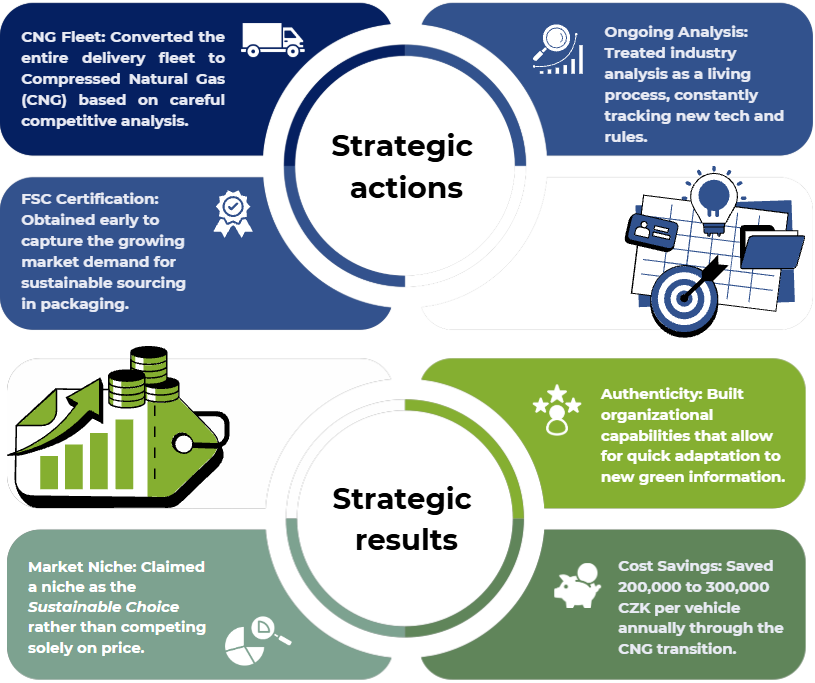
The Plojhar Company: A Strategic approach to industry analysis and green positioning
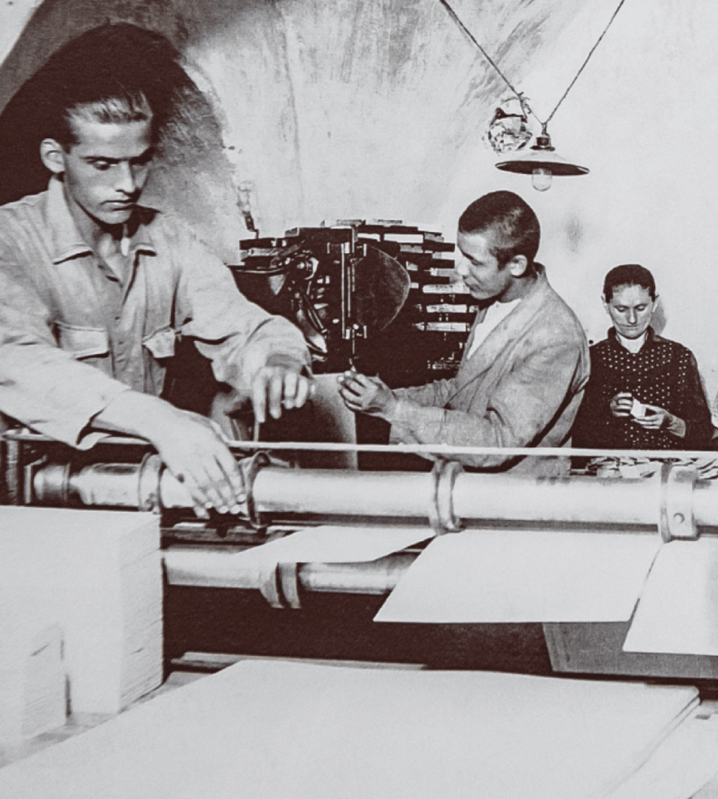
The Plojhar family’s 135-year journey from traditional bookbinding to sustainable packaging demonstrates how thorough industry analysis can guide successful green transition strategies. Their experience offers practical insights into how family businesses can leverage competitive intelligence to build lasting environmental advantages.
5. Conclusion
A successful green transition starts with knowing your industry and understanding how sustainability is reshaping competition. When family businesses combine this knowledge with smart market observation, they can make decisions that strengthen both their resilience and their reputation. The path forward is about staying curious, tracking new developments, and adapting early, turning change into an opportunity to grow and lead in their sector.
6. Self-Assessment
7. Resources and Further Reading
- The European Green Deal – consilium.europa.eu/en/policies/european-green-deal
- European SME Survey on Green Transition – futurium.ec.europa.eu/en/promoting-enterprise/news/new-flash-eurobarometer-shows-smes-are-driving-green-transition
- European Innovation Council (EIC): eic.ec.europa.eu – Information on emerging green technologies and funding opportunities
- SME EnviroPortal (European Commission): ec.europa.eu/environment/sme – Practical guidance for small businesses on environmental compliance
8. References
- PubAffairs Bruxelles. (2023, July 20). Eurobarometer: Majority of Europeans consider that the green transition should go faster – PubAffairs Bruxelles. pubaffairsbruxelles.eu/eu-institution-news/eurobarometer-majority-of-europeans-consider-that-the-green-transition-should-go-faster
- Futurium. (n.d.). Packaging waste statistics – futurium.ec.europa.eu/en/promoting-enterprise/news/new-flash-eurobarometer-shows-smes-are-driving-green-transition
- FSC (Forest Stewardship Council)
- LEED building certification (Leadership in Energy and Environmental Design)